
A closer look at movement
Your history and examination help identify the joints, muscles, and movement patterns that may contribute to your symptoms. That starting point guides a care plan and helps identify concerns that need further evaluation.
Chiropractic sports care · Waimea, Hawai‘i
From the flower garden to the athletic arena, the movements that matter to you deserve attention. Chiropractic sports care begins with understanding what hurts, what feels limited, and where you want to go.
Dr. Eric Mizuba D.C.,DACBSP,CHT,ISMST
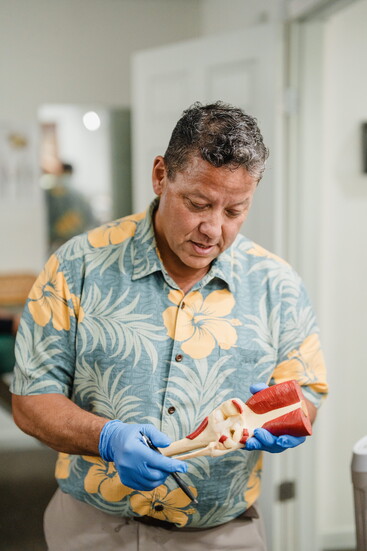
Chiropractic Sports Care in Hawaii
Your history and examination help identify the joints, muscles, and movement patterns that may contribute to your symptoms. That starting point guides a care plan and helps identify concerns that need further evaluation.
Spinal manipulation and mobilization are options for some people with low-back pain. A major review found broadly similar outcomes to other recommended therapies for chronic low-back pain, with some short-term functional benefit.
Read the supporting sourceCare can combine appropriate manual techniques with exercises, activity modification, and education. Building confidence in movement and making a plan you can use between visits are central to the conversation.
Read the supporting sourceWalking comfortably, returning to training, or enjoying a family outing gives progress a practical meaning. We will discuss what you would like to do more easily and how to reassess the plan as your response becomes clear.
A plan informed by evidence
Dr. Mizuba is a board-certified chiropractic sports physician. You do not need to be an athlete to benefit from an assessment that considers movement, demands on your body, and the activities you enjoy. His approach welcomes collaboration with other healthcare professionals when your situation calls for it.
The evidence for spinal manipulation relates to particular musculoskeletal conditions, especially low-back pain. Average benefits are generally modest and do not establish that spinal treatment improves unrelated internal-organ conditions or prevents disease. The right treatment depends on your diagnosis and preferences.
Your visit, explained
Discuss the onset of symptoms, previous injuries, current care, and the movements you miss.
Review the examination findings, suitable techniques, expected benefits, alternatives, and risks before treatment.
Use the guidance you agree on between visits and share what is improving, what is not, and any new symptoms.
Appointments are arranged directly with our team. A visit request does not reserve a date or time.
A little clarity before you begin
Not necessarily. Your examination, response, preferences, and clinical needs guide the use of manipulation, mobilization, exercise, or other appropriate care.
Temporary soreness or stiffness can occur after manual treatment. Rare serious complications have been reported, particularly with neck manipulation. Discuss your health history and the benefits, risks, and alternatives of the proposed technique.
No. The same attention to movement can help shape a conversation about everyday activities, work, gardening, or recreational sport.
Tell us about the activity you want back. Start with a personal assessment and a clear conversation about your options.
65-1206 Mamalahoa Hwy, Suite 3-212
Kamuela, HI 96743
For a closer look
This information is educational and does not replace an individual medical evaluation. Studies describe particular populations and protocols; results are not a promise of benefit for every patient. We will discuss suitability, alternatives, and risks before care.