
ESWT / Shockwave therapy · The Big Island

Precision for the places
that hold you back.

A persistent heel, tendon, or shoulder problem can change the way you move through your day. ESWT offers a noninvasive option to discuss when a careful assessment points to an appropriate condition.

Swiss precision with the spirit of Aloha.

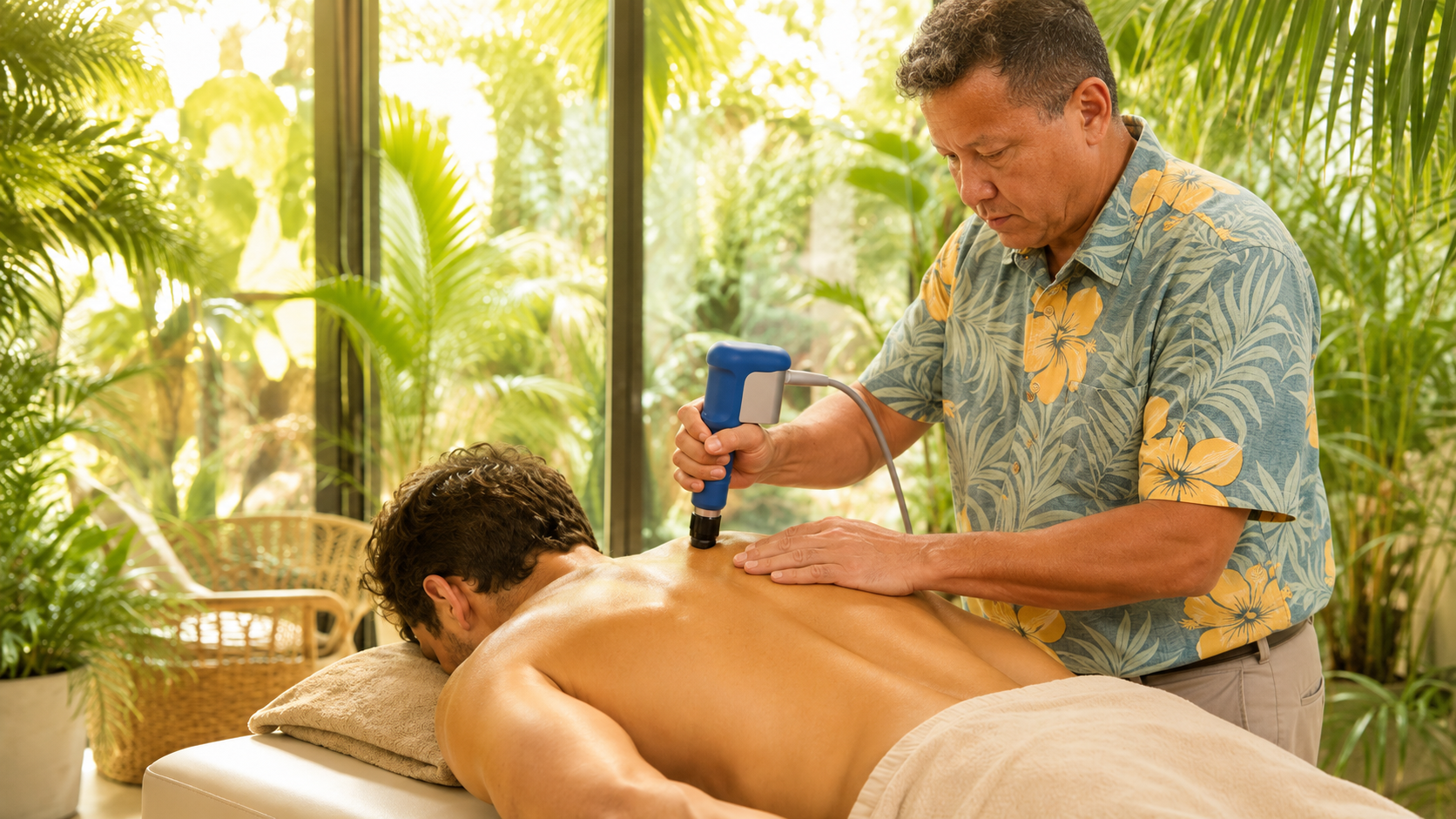
Shockwave treatment at The O2 Lab Hawaii
The O2 Lab HawaiiPersonal care. Big Island roots.

ESWT Shockwave Therapy in Hawaii

Understand your options.
Feel ready for the next step.

01

Targeted acoustic energy

Extracorporeal shockwave therapy delivers acoustic energy through the skin to a selected treatment area. Focused shockwaves and radial pressure waves are different technologies; the appropriate approach depends on the diagnosis, depth, and tissue being treated.

Read the supporting source
02

Persistent heel pain

Research supports shockwave as an option for selected cases of persistent plantar fasciitis. It may help reduce pain and improve function, although results vary with the protocol and patient. An assessment helps distinguish plantar fasciitis from other causes of heel pain.

Read the supporting source
03

Tendon & shoulder concerns

Published studies include calcific shoulder tendinopathy and a range of sports-related tendon conditions. Evidence is stronger for some diagnoses than others. A promising result for one tendon problem should not be assumed to apply to every painful area.

Read the supporting source
04

Part of an active recovery plan

Shockwave may be used alongside progressive exercise and other rehabilitation. The goal is a meaningful change in comfort and function, with a plan for activity rather than relying on treatment sessions alone.

Read the supporting source

A plan informed by evidence

Advanced technology.
Attentive care.

Our ESWT care features exclusivity with Storz AG Medical. Dr. Eric Mizuba is nationally and internationally board certified in ESWT/shockwave therapy. His approach combines technical training with a close look at your symptoms, activities, and recovery goals.

Systematic reviews support ESWT for selected musculoskeletal conditions, while outcomes and evidence quality vary. Device type, dose, number of sessions, diagnosis, and concurrent exercise can all affect results. The published literature informs your options; it does not guarantee an individual response.

Your visit, explained

First, we listen.
Then, we plan together.

  1. 01

    Locate the problem

    Discuss your symptoms, examine the relevant area, and review previous care or imaging when appropriate.

  2. 02

    Tailor the session

    The team explains the device, target area, expected sensation, and treatment plan. Tell us if the intensity is uncomfortable.

  3. 03

    Build toward function

    Agree on activity guidance and a way to track change, such as walking tolerance, a work task, or a gradual return to sport.

Appointments are arranged directly with our team. A visit request does not reserve a date or time.

A little clarity before you begin

Your questions
are welcome.

Is shockwave therapy surgery?

No. It is delivered externally through the skin. Your assessment determines whether it is a suitable noninvasive option.

Will I feel the treatment?

Treatment can be uncomfortable. Temporary soreness, redness, swelling, or bruising may occur. The doctor will explain relevant risks, medications, and health factors before care.

How quickly will I notice a change?

Response is individual and may develop over time. We will discuss the proposed course, review points, and what to do if symptoms are not improving.

Let’s talk about what is holding you back.

Ask whether ESWT belongs in a plan for your symptoms, your activities, and the life you want to return to.

65-1206 Mamalahoa Hwy, Suite 3-212
Kamuela, HI 96743

For a closer look

Research & further reading.

  1. Speed (2014). A systematic review of shockwave therapies in soft tissue conditions: focusing on the evidence.
  2. Use of extracorporeal shockwave therapies for athletes and physically active individuals: a systematic review (2024).

This information is educational and does not replace an individual medical evaluation. Studies describe particular populations and protocols; results are not a promise of benefit for every patient. We will discuss suitability, alternatives, and risks before care.